
Cosmetic or reconstructive eyelid surgery, also known as blepharoplasty, is a procedure designed to refresh the appearance of the eyes or address functional concerns by treating excess eyelid skin, puffiness, under-eye bags, and a tired or aged look. Because the eyes are one of the first areas to show signs of aging, even subtle changes to the upper or lower eyelids can make the face appear more rested, alert, and balanced. Blepharoplasty is also often performed for hooded, heavy eyelids that block eyesight. When the visual disability is significant enough, surgery may be covered by private insurance or Medicare. Our team can help you find out if this applies to you.
At Fante Eye & Face Center, patients in Denver, Greenwood Village, and the surrounding Colorado communities receive care from doctors who specialize in cosmetic and functional oculofacial plastic surgery. Dr. Robert Fante is double board-certified and a fellow of the American Society of Ophthalmic Plastic and Reconstructive Surgery, while both Dr. Levitt and Dr. Huang are ASOPRS-trained surgeons and ASOPRS Candidate Members. Together, they create individualized treatment plans focused on natural-looking results, eye health, and long-term patient confidence.
What is a Blepharoplasty?
Every year, 100,000 men and women choose cosmetic eyelid surgery to improve their appearance. Why? The eyes are the first place people look when they look at us. They are also the first places to show aging. People considering eyelid enhancement want to improve:
-
Droopy, puffy eyelids
-
Sagging skin that weighs on the eyelashes
-
Bags under the eyes
-
A tired appearance
These problems can make you look older, and droopy eyelids can sometimes impair vision. Eyelid surgery can address these issues so you look less worn and tired. The surgery, called blepharoplasty, can be performed on the upper eyelids, the lower eyelids, or both together.
Blepharoplasty contours the fat and muscle and removes excess skin from the upper and lower eyelids. Other options include ptosis repair and repair of malpositioned eyelids from previous surgery, trauma, or aging.
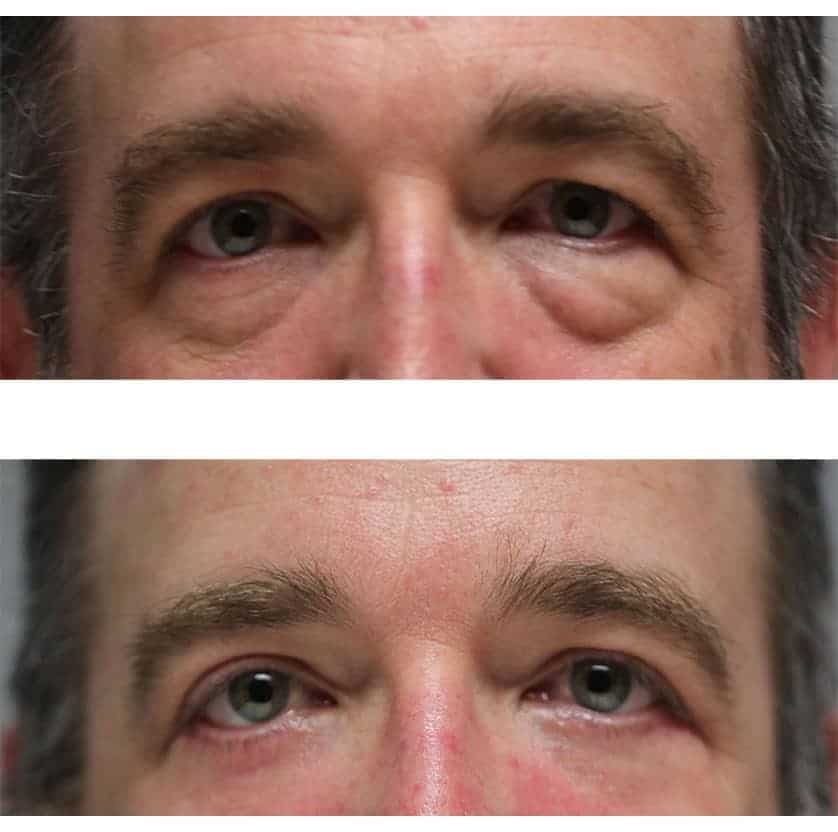
Patient Testimonial
I had a wonderful journey with Fante for my lower bleph and eye pinch. Dr Levitt is amazing! I highly recommend her. She was knowledgable and gave me great recommendations, she was available for follow up discussions and helped me decide on some follow up work. The entire office is great and I always felt well cared for.
I had an upper eyelid procedure done on both eyes and couldn’t be happier with the results! The procedure was quick and recovery has been fast and pain – free. The results are symmetrical and very natural looking. I highly recommend Dr. Fante and his team!!
Candidates for a Blepharoplasty
Physically and emotionally healthy men and women are the best candidates for eyelid surgery. Generally speaking, individuals see a facial cosmetic surgeon after age 35, when they begin to notice signs of aging. Depending on family characteristics and your lifestyle, you may want to see us sooner.
Anyone who’s over 18, in good overall health, and willing to have reasonable expectations is a good candidate for blepharoplasty. Individuals with certain medical conditions may be candidates for surgery but may need special attention due to the added complexity of those conditions and the increased risks involved. Such conditions would be:
-
Thyroid Eye Disease (Graves’ Disease)
-
Chronic severe dry eye
-
High blood pressure, heart disease, and diabetes
-
Chronic use of anticoagulants such as warfarin and clopidogre
Eyelid surgery can do wonders for your appearance and can greatly boost your self-confidence! But eyelid surgery is not a magic answer to the bad feelings you may have about yourself. People may not treat you differently after your surgery. That is why it is so important to have realistic expectations about the outcome and to speak frankly with your surgeon to ensure all your questions are answered. You need to have a complete understanding of the procedure and the changes you will go through post-surgery.
The Benefits of Eyelid Surgery
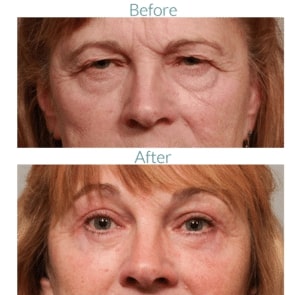
Eyelid surgery may improve, but does not completely correct the problems mentioned above. Blepharoplasty can remove under-eye bags and correct droopiness and puffiness of the eyelids. Dark circles under the eyes can be due to under-eye bags, which will be improved when the bags are removed. Blepharoplasty cannot always eliminate the overall darkness of the skin under the eyes.
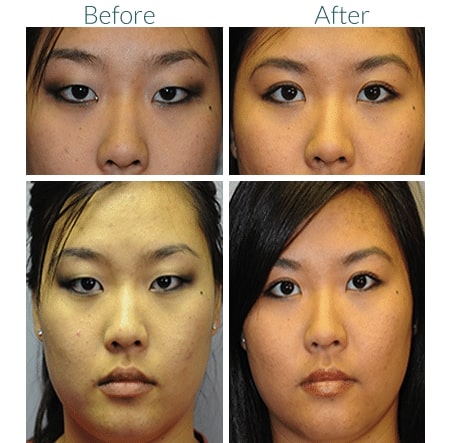
In addition, some people have eyelid surgery to correct inherited characteristics. For example, many Asian women have surgery to create a “double eyelid” or a well-defined upper crease.
Eyelid surgery doesn’t completely address crow’s feet and isn’t appropriate for lifting sagging eyebrows. It won’t eliminate those dark ‘bags’ or circles under your eyes. When desired, blepharoplasty and other forms of eyelid surgery can be performed alongside a facelift (opens in new tab), cheek lift (opens in new tab), brow lift (opens in new tab), or other therapies to address these concerns for maximum results.
Individual needs vary widely. Our doctors can best answer most questions you may have about eyelid surgery during your initial consultation.
Eyelid Surgery Preparation
As with all facial plastic surgery, good health and realistic expectations are desirable.
-
A complete medical history will be taken. Be sure to tell our doctors if you have any allergies.
-
Your vision will be tested and tear production assessed.
-
During your consultation with our doctors, you will decide whether all four eyelids should be treated or just the upper or lower lids. You’ll have a chance to discuss other options as appropriate for your face and your goals.
-
Our doctors will explain the techniques they will use, the anesthesia, and the risks involved.
-
Our doctors and staff will give you guidelines on eating and drinking, smoking, and any vitamins, herbs, and medications you should take or avoid.
The Blepharoplasty Procedure
In general, the blepharoplasty procedure will last between 30 and 90 minutes and will be performed under local anesthetic with a sedative. Depending on your specific situation, surgery can be performed in our office or at an ambulatory surgery center.
There are many procedures to choose from. Your surgeon will customize your procedure for your unique face. Some of the possibilities are:
-
Removing puffiness from upper and/or lower eyelids (prolapsed fat that accumulates with age)
-
Removing excess skin from the upper eyelids (that droops, sometimes interfering with vision)
-
Correcting the weakness of the eyelid muscles and tendons
-
Smoothing the area below the eyes (with laser resurfacing, neuromodulators, or surgical removal of skin)
Our team uses a laser for many procedures. When an incision must be made, it’s always very tiny and strategically placed so that they heal into discreet, well-hidden lines. The incisions will follow the natural creases of your upper eyelids and the natural line just below your lower eyelashes. The doctor closes the incisions with very small stitches, which he will remove in a week or so.
Upper & Lower Eyelid Blepharoplasty
Click the video above to see Dr.Fante perform a upper and lower blepharoplasty
Risks of Eyelid Surgery
Harm to the eyes is extremely uncommon after Blepharoplasty. You may find in the first weeks after the surgery that your eyes:
-
May tear up more than usual
-
Be more light-sensitive
-
Have some trouble focusing, especially if your upper eyelids were very droopy beforehand
-
Feel a bit itchy or burning
Asian Blepharoplasty
Blepharoplasty is sometimes performed on Asian eyes for a different reason than it is on Occidental eyes. For Occidental eyes, the surgery is usually to correct droopiness caused by age. This is sometimes also the reason for eyelid surgery for Asians.
For Asians with a “single” eyelid, it’s also often done to soften or westernize the look of the eyes and is commonly called “double eyelid surgery”. A “double eyelid” has skin visible between the eyelashes and the skin fold – a place where many women like to wear makeup.
There’s also a thing called the epicanthal fold, a piece of tissue that drapes over the inner part of the eye. In most Occidentals, it’s barely visible, whereas in most Asians, it’s quite evident.
When it’s adjusted surgically, a new crease forms, giving the eyes a different look and causing the eyelashes to turn upwards instead of being pushed downwards by the epicanthal fold.
Revision Eyelid Surgery
If you have had eyelid surgery in the past and are not happy with the results, our surgeons may be able to perform revision eyelid surgery depending on how long it has been since the previous procedure. To see the full results of a blepharoplasty procedure, it is always advisable to wait a few months for healing to complete and swelling to diminish. If you have given time and are still not happy with the results, schedule a consultation with our office to explore your options for an eyelid revision procedure.
Every case is different, so it is important for our team to evaluate each patient to determine whether they are a candidate for revision surgery. If the original surgery resulted in overcorrection, meaning too much tissue was removed, the remaining skin may need to be redistributed to provide better results. If undercorrection is the problem, meaning not enough tissue was removed, another standard blepharoplasty procedure may be performed.
Cost of Upper Blepharoplasty
At your consultation, once we know the particulars of your surgery and insurance, we will strive to provide an estimate of your out-of-pocket costs. Please understand that if you are planning to file your surgery with insurance, it is entirely your responsibility to ensure that we are in-network with your plan and that, if referrals are required by your plan from your PCP, you obtain them and bring them to our office. Your procedure will be billed under your medical insurance (not your vision insurance).
As far as your financial responsibility is concerned, it depends on your specific plan, whether you have met your deductible, and your co-insurance (if any). We will take care of getting prior authorization and predetermination completed before your operation whenever possible.
Can a Blepharoplasty Be Combined With Any Other Procedures?
For a more refreshed, youthful appearance, our doctors may recommend combining eyelid surgery with other procedures. The choice will always be yours, but our team might recommend:
-
Cosmetic injectables, facial fillers, and/or microfat transfer to finish off your best appearance
-
Forehead lift to improve a drooping brow and smooth the forehead
-
Skin resurfacing to improve the fine lines in the eye area
-
Endoscopic mid-face or cheek lift (opens in new tab) to efface the intensity of dark circles and improve the contours of the cheeks
-
Proper treatment for any issues that might affect the health of your eyes
Upper eyelid surgery is often done in conjunction with a brow lift (opens in new tab), which mildly raises the eyebrows, to give the eyes a more open, rested look. Lower eyelid surgery is often performed together with an endoscopic mid-face lift. Another common combination is for people to have cosmetic surgery on both the eyes and the neck at the same time.
Eyelid Surgery Patient Testimonial
This embedded content is blocked until you allow marketing cookies.
What to Expect After a Blepharoplasty
After your blepharoplasty, you can go home, but you’ll need someone to drive you.
-
There’ll be antibiotic ointment temporarily blurring your vision
-
You’ll receive a prescription for post-operative pain management
-
Our doctors will give you written instructions for self-care
-
There’ll be some swelling and bruising, which you can minimize with an ice pack. Herbal and homeopathic medicines can sometimes also help with bruising. Our team will give you information on which ones to consider.
-
Your sutures will typically be removed after about a week
After a week or so, you’ll be able to return to work, exercise, and normal routines. Some bruising may persist into the second week after surgery. Since we live in the Rocky Mountain climate, you will probably want to use artificial tears for a little while to offset the dry air.
If you are a contact lens wearer, you won’t be able to wear them for at least two weeks. Within two or three days of the surgery, you’ll be able to use a computer, watch television, and read comfortably. It may be 7-10 days or so before you feel comfortable facing the public and going back to work. Most people are “back to normal” by two weeks after surgery. Healing will continue and isn’t really complete until a year or more after surgery (scars can continue to improve throughout your life). Once your surgeon has given you the go-ahead, you can wear makeup to hide any lingering bruising. In the interests of helping it fully subside, avoid smoking and drinking excessive alcohol.
Recovery From Eyelid Surgery
Typically, you should restrict your activities for about one week post-surgery and, in particular, avoid vigorous activity for about three weeks. We recommend walking and other light activities. You would not want to increase your blood pressure and cause bleeding during this time by doing serious running or lifting. Patience will be the key to successful healing and your best new look after full recovery.
You can speed your healing time by taking rest seriously. Prop yourself up in bed with pillows and watch TV, do social media, or read to pass the time. Let yourself doze off as much as you want, so long as you stay on your back. A comfortable recliner is great for this, too.
If you notice extra sensitivity to wind, sun, or other bright lights, avoid them or wear good sunglasses. Your doctor may provide special sunblock for the eyelids if needed.
Do not worry if the little scars remain pink for several months afterward. They will eventually become no more than a thin whitish line in the eyelid crease. It will only be visible when you close your eyes. They’ll be more than offset by the refreshed and youthful look your face will have. With good post-op self-care, you can expect to enjoy the new, younger you for many years to come.
Frequently Asked Questions
Only temporarily, if at all. You may find in the first weeks after the surgery that your eyes tear more than usual, feel more light-sensitive, have some trouble focusing, or feel a bit itchy or burning. These effects are typically part of the early healing process, but our doctors will discuss what to expect based on your specific procedure.
All incisions leave scars. These incisions are very tiny and strategically placed within existing creases. The resulting scars will be virtually invisible or completely hidden inside the eyelid. When needed, only rarely, there are cosmetics that will camouflage these little scars very well.
You will not need a driver for most office appointments. However, virtually all surgeries performed in the office, surgery center, or hospital are completed under sedation, so you will not be able to operate a vehicle afterward. Please plan to have a driver for your surgery appointment.
Most people can return to work, exercise, and normal routines after about a week, although some bruising may persist into the second week after surgery. Most people feel “back to normal” by about two weeks, but healing continues gradually, and scars can continue to improve for many months.
Depending on your concerns, alternatives or complementary treatments may include Botox, fillers, skin resurfacing, brow lift (opens in new tab), cheek lift (opens in new tab), or treatment for eye health issues that may affect the eyelids. During your consultation, our doctors can help determine whether blepharoplasty or another option is the best fit for your needs.
Yes. Blepharoplasty is customized based on your anatomy, concerns, and goals. Some patients benefit from upper eyelid surgery, some from lower eyelid surgery, and others from treating all four eyelids. During your consultation, our doctors will evaluate your eyelids, eye health, and facial balance to recommend the most appropriate approach.
Revision eyelid surgery may be considered if you have fully healed from a previous eyelid procedure and are still unhappy with the results. Because swelling can take time to resolve, it is usually important to wait several months before judging the final outcome. Our doctors can evaluate your concerns and determine whether revision surgery may be appropriate.
Why Choose Fante Eye & Face Center For Cosmetic Eyelid Surgery?
Choosing the right provider for cosmetic eyelid surgery is important because the eyelids play a key role in both facial appearance and eye function. At Fante Eye & Face Center, patients benefit from highly specialized expertise in oculofacial plastic surgery, a field focused specifically on the eyelids, orbit, and surrounding facial structures. Dr. Robert Fante is double board-certified and serves as a fellow and current President of the American Society of Ophthalmic Plastic and Reconstructive Surgery (ASOPRS), while Dr. Alexandra Levitt and Dr. Amy Huang are fellowship-trained oculofacial plastic and reconstructive surgeons who completed advanced training through ASOPRS-accredited programs.
This level of focused training allows the team to perform cosmetic eyelid procedures with a strong understanding of both form and function. Whether addressing excess upper eyelid skin, under-eye bags, or more complex revision cases, the doctors at Fante Eye & Face Center use precise surgical techniques designed to support eye health while achieving natural-looking, balanced results.
Cosmetic Eyelid Surgery Consultation in Denver & Greenwood Village, CO
If you are bothered by drooping upper eyelids, puffy eyelids, under-eye bags, or a tired appearance, Fante Eye & Face Center can help you explore whether cosmetic eyelid surgery is right for you. During your consultation, our doctors will evaluate your concerns, review your medical history, discuss your goals, and explain your treatment options, including surgical and nonsurgical alternatives when appropriate.
To book a consultation with Fante Eye & Face Center in Denver, CO, serving patients from Greenwood Village, Castle Pines and the surrounding communities, call (303) 839-1616 today.