Quick Summary
- Otoplasty reshapes or repositions the external ears to improve concerns such as protruding ears, uneven development, unusual ear shape, or stretched earlobes.
- The procedure may benefit children once their ears have fully developed, usually around age four or five, as well as teens and adults in good general health.
- During surgery, the surgeon typically makes an incision behind the ear, adjusts the cartilage and skin, and may use permanent sutures to hold the ear in its new position.
- Otoplasty usually takes one to two hours, and most patients return to work or school within approximately seven to 14 days.
- Fante Eye & Face Center plans each procedure around the patient’s ear anatomy, cartilage characteristics, symmetry, concerns, and treatment goals.
Ear surgery, also known as otoplasty, can improve the shape, position, proportion, or overall appearance of the external ear. For children, teens, and adults who feel self-conscious about protruding ears, stretched earlobes, congenital ear shape concerns, or acquired ear deformities, otoplasty can create a more balanced appearance while preserving a natural look.
At Fante Eye & Face Center, patients from Denver, Greenwood Village, and surrounding Colorado communities receive care from doctors with advanced training in facial plastic and reconstructive surgery. Dr. Robert Fante is double board-certified and has extensive experience with facial reconstructive procedures, while both Dr. Levitt and Dr. Huang are ASOPRS-trained surgeons and ASOPRS Candidate Members. This specialized background allows the team to carefully evaluate each ear concern and recommend a personalized approach to correction.

What is Otoplasty?
Often, otoplasty (ear surgery) is done for children aged about 4 to 14. It’s done to prevent teasing or humiliation when the ears protrude too much or “look funny”, and since our ears are fully grown by age 4 or 5, it’s best done as early as possible.
Just as often, those kids don’t have it done and grow into adults who can benefit just as much from ear surgery, so that many men and women decide to have their ears improved as adults. Adults don’t incur any extra risk, and for many, it is actually easier since they can have surgery under local anesthesia. Otoplasty can remedy many conditions of the external ear including:
-
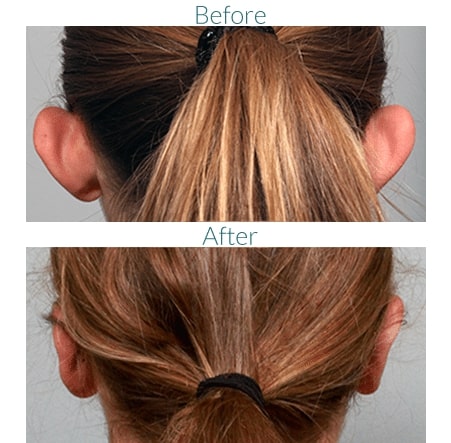
Protruding ears that stick out too much
-
Cupped ear – a very small ear
-
Lop ear – the tip bends forward and downwards
-
Shell ear – the outer curve and rim is missing
-
Over-large or stretched earlobes
-
Highly creased or wrinkled ear lobes
-
Spock’s ear – a pointed top and an extra fold
-
Ears too large or too small
-
Excessively large “gauge” ear piercing
What Are The Benefits of Otoplasty Surgery?
The ears are particularly important to facial symmetry and appearance because they frame the face. Although people rarely comment that someone has beautiful ears, they definitely comment when the ears are prominent or unusually shaped. When the ears protrude significantly, they diminish the proportions of the face. Large or protruding ears, as you may know, can be the target of unkind remarks. Teasing or comments about their ears can be particularly difficult for children. While most children who are teased about their ears do grow into healthy, well-adjusted adults, otoplasty can help them avoid this unnecessary challenge of childhood.
In addition to helping children navigate childhood without the concern of how their ears make them look, otoplasty benefits teens and adults, as well. Reshaping the ears can have a dramatic effect on one’s sense of confidence. Through otoplasty, a person of any age is given the opportunity to genuinely like the way they look.
Ear Surgery in Denver Before and After
Am I a Candidate for Otoplasty?
Yes, if you’re:
-
Over 3 years old
-
In good general health
-
Realistic in your expectations of the outcome
Most people are good candidates for otoplasty. The cartilage in the ears can be treated with reshaping at any age. It is necessary for the ears to be fully formed before surgery is conducted. This happens sometime around age 4 or 5.
Ear Surgery in Denver Pre-Procedure Evaluation
Before your procedure, our team will evaluate your history to determine whether the problem is congenital or acquired, and whether it is causing psychological problems or self-consciousness. From there, they will move on to the clinical examination in which each ear is evaluated separately across multiple areas. Your doctor will evaluate the ear for underdevelopment, helical prominence/deformity, conchal bowl size and configuration, cartilage strength and malleability, lobule protrusion, cephalitis position asymmetry, and cephalo-auricular angle.
Preparation for Ear Surgery in Denver
Your surgeon will give you specific pre-op instructions. Your head won’t have to be shaved.
If it’s for a child:
-
It is best not to insist on it until the child is ready. The child will be more cooperative and have a better outcome if he or she is emotionally ready to have it done.
-
Make arrangements for the child to be absent from school for a week or so, and to have some discreet playground supervision so as not to get their ears hurt by play activity.
-
Your surgeon may use general anesthesia so the child can sleep through the procedure.
Whether it’s a child or an adult:
-
The otoplasty surgery takes 1 to 2 hours, depending on your individual needs
-
A small incision is made in the back of the ear so as to gain access to the cartilage
-
The surgeon will sculpt the cartilage and direct it back closer to the side of the head
-
Permanent stitches might be used to help maintain the new position
-
Sometimes, some cartilage is removed to create a more natural look
-
For certain deformities, other incisions and reconstruction will be performed as appropriate
-
Most commonly, there will be a small scar on the back of the ear
How is Otoplasty Performed?
We typically suggest a general anesthesia for children undergoing otoplasty. Some teens and adults can undergo this procedure with a local anesthetic and mild sedative.
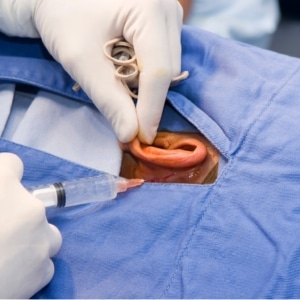
In most cases, an incision is made in the natural fold behind the ear. This allows access to cartilage and skin, which are adjusted to shape the ear into a better form. Permanent sutures may be placed beneath the skin to hold the ear in this position as it heals. For certain mild situations, sutures may be placed to hold the ears closer to the head without the need for cartilage or skin repositioning.
A dressing is then placed over the ear(s) and left in place for at least one day. While the dressing is in place, patients may notice a mild reduction in their hearing which resolves as soon as the dressing is removed.

Can Other Procedures Be Done at the Same Time as Otoplasty?
Yes. Otoplasty is often done in conjunction with other procedures, such as:
You can ask about the combinations you’d like and discuss the possibilities with our team before anything is done.

Earlobe Repair for Gauged Ears
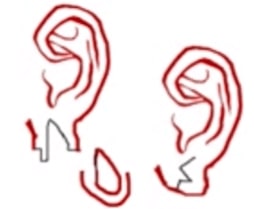
Very large piercing holes can be created by gauge earrings in both men and women. When they are no longer desired, reconstruction can be accomplished under local anesthesia using simple flaps and closure in multiple layers.

Alternatives to Otoplasty
While surgery is the primary otoplasty option offered at Fante Eye & Face Center, some patients ask about nonsurgical or less invasive approaches to ear reshaping.
There are two alternatives to surgery: Incisionless surgery and molding.
Although neither of these is offered at our practice, here is some information for your reference.
Incisionless surgery is an option for some patients using complex suture placement. If incisionless surgery is not an option, molding is also available.
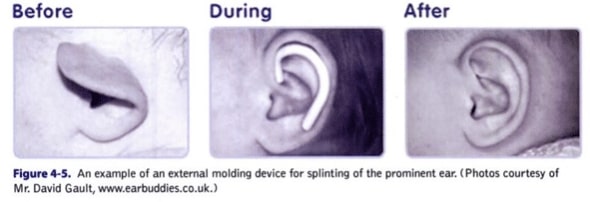
Molds can be used on both infants and adults to reshape the ears.
-
During early infancy, the ear cartilage is more malleable and viscous and less elastic than it will later be (possibly related to maternal estrogen levels), and so there is an opportunity to mold the ear. Best results are seen for molding treatment begun within the first 3 days of life and continued until 6 months of age
-
In adulthood, laser reshaping of the auricular cartilage followed by the application of external conformers has been studied (Leclere, Lasers Surg Med, 2011). Patients wear conforming silicone elastomer molds for 4-6 weeks after in-office laser treatment. The entire system is currently marketed by Numenis as Cartilaze in the US.
Recovery From Otoplasty
After otoplasty surgery, patients can expect to feel more tired than usual. This is especially true for those who undergo general anesthesia. Medication may prolong this feeling for a day or two.
Although the ears will be wrapped immediately following surgery, patients may sense the swelling that is common after otoplasty. The night of surgery is when discomfort may be noticeable. It is helpful to lie with the head elevated. Patients may also feel nauseated from their medication or anesthesia. A diet of cool or warm soft foods and beverages is ideal.
For the first few days of recovery, pain and throbbing may occur. Eating soft foods that don ‘t require a lot of chewing can help minimize discomfort. Within the first week of recovery, comfort should improve significantly. The bandages that were placed after surgery will need to remain in place to protect healing tissue for 1-3 days as determined by the surgeon. After that, patients are instructed to wear a ski headband or knit hat as protection when sleeping so that the ear(s) don’t get bent over by the pillow.
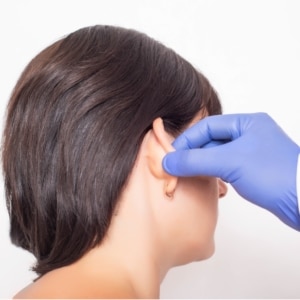
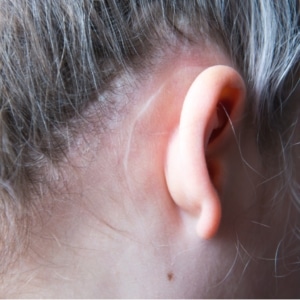
Swelling and discomfort gradually improve over time. By week 6 to 8, these side effects should be near, if not completely, gone.
You can be back on your feet within a few hours. Your doctor will give you written directions for post-op care.
-
There’ll be bulky bandaging at first, to reinforce healing in the new position
-
Your ears might ache slightly for a few days, and your doctor may prescribe pain medication
-
After a few days, you won’t need a bandage but there will be some swelling and bruising for 1-2 weeks
-
Stitches will dissolve, or be removed in about a week
-
For about a month, avoid any activity that might bend your ears or knock anything against them. You’ll be asked to wear a tennis headband while sleeping, to avoid inadvertently bending the ears. Be careful with helmets if you participate in a sport that uses one
What Are the Risks of Ear Surgery?
As with any surgery, complications following surgery are possible. These possible complications include:
-
Hematoma – presents with pain and is usually the result of insufficient hemostasis. Hematomas must be urgently drained to prevent tissue necrosis, with additional surgical coagulation as required
-
Infection – systemic antibiotics are recommended. Surgical asepsis is obviously important as well.
-
Skin necrosis – avoid excessive pressure dressings and drain hematomas
-
Wound dehiscence – careful wound approximation is necessary
-
Asymmetry and under and over-correction – careful intraop assessment of symmetry of correction is helpful. Occasionally, refinement or enhancement of secondary surgery may be necessary to satisfy patient concerns.
-
Postauricular skin retraction and/or scarring – can probably best be avoided by not removing any skin from the postauricular sulcus
There are no disease-related complications. If you feel that you are having any symptoms listed above please contact our office.
Frequently Asked Questions
Otoplasty is considered low on the pain scale compared to most other plastic surgery procedures. Patients find that over-the-counter pain medication is typically sufficient for managing comfort after ear pinning and other forms of otoplasty.
Several aspects of care contribute to the overall cost of otoplasty, these include: The extent of surgery may also affect the cost of otoplasty. During your consultation, we will provide you with an estimate and a cost breakdown.
-
Surgeon’s fees
-
Anesthesia fees
-
The facility, surgical center, or hospital fees
-
Medical tests, if requested
-
Prescriptions
-
Post-surgical garments or dressings
Yes, a little. Most people return to work after 7 to 14 days.
All incisions leave scars. For cosmetic ear surgery, the scars are usually hidden behind the ear and heal very well. Some earlobe repairs and certain ear deformity corrections will require an incision and a scar on the front of the ear. In these cases, every attempt is made to hide the scar along natural lines. We’re all different when it comes to scarring, and it’s partly determined by our heredity. Some of us form small, faded scars rather easily. Others form larger, more pigmented scars. This is not easily predictable. However, any overly large scars can be treated with a minor follow-up surgery. Your surgeon will make the incisions as small and discreet as possible for the best overall outcome for you. Each otoplasty is individualized, and you can discuss scarring concerns with ou
We’re all different when it comes to scarring, and it’s partly determined by our heredity. Some of us form small, faded scars rather easily. Others form larger, more pigmented scars. This is not easily predictable.
However, any overly large scars can be treated with a minor follow-up surgery. Your surgeon will make the incisions as small and discreet as possible for the best overall outcome for you. Each otoplasty is individualized, and you can discuss scarring concerns with our team before any procedure begins.
Surgery typically takes 1 to 2 hours, after which the patient has a short stay in the recovery area. Once anesthesia begins to wear off, the patient is released to a loved one.
It can be done with either a local anesthetic combined with some IV or oral sedation for adults, or with general anesthesia in children. Your doctor will discuss this with you.
Why Choose Fante Eye & Face Center for Ear Surgery?
Otoplasty requires careful attention to facial proportion, ear shape, cartilage structure, and symmetry. At Fante Eye & Face Center, our doctors evaluate each ear individually and consider how the ears frame the face as a whole, helping patients pursue results that look balanced rather than overcorrected.
The practice brings together experience in facial cosmetic surgery, reconstructive care, and delicate tissue repair. This is especially important for patients seeking correction of protruding ears, earlobe deformities, stretched piercings, congenital ear shape concerns, or revision procedures.
Because otoplasty may be performed for both children and adults, our doctors also take time to discuss age, emotional readiness, anesthesia options, recovery expectations, and realistic goals. The result is a thoughtful treatment plan designed around each patient’s anatomy, comfort, and long-term confidence.
Ear Surgery Consultation in Denver, Greenwood Village, Castle Pines and Highlands Ranch
If you or your child are bothered by protruding ears, stretched earlobes, congenital ear shape concerns, or other external ear deformities, Fante Eye & Face Center can help you understand your treatment options. During your consultation, our doctors will evaluate the concern, discuss realistic goals, and explain whether otoplasty or another approach may be appropriate.
To book a consultation with Fante Eye & Face Center in Denver, CO, serving patients from Greenwood Village, Castle Pines and the surrounding communities, call (303) 839-1616 today.