
Eyelid lumps, bumps, lesions, and skin cancers are common concerns that can affect comfort, appearance, eyelid function, and eye health. While many eyelid growths are benign, some may be cancerous or precancerous, including basal cell carcinoma, squamous cell carcinoma, sebaceous carcinoma, or melanoma. Because eyelid skin is delicate and close to the eye, accurate diagnosis and careful treatment are important.
At Fante Eye & Face Center, patients from Denver, Greenwood Village, and surrounding Colorado communities receive evaluation and treatment for eyelid lesions and eyelid skin cancer from doctors with specialized training in eyelid reconstruction, ocular surface protection, and oculofacial plastic surgery. Dr. Robert Fante is double board-certified and has authored textbook chapters on eyelid reconstruction, while both Dr. Levitt and Dr. Huang are ASOPRS-trained surgeons and ASOPRS Candidate Members. This experience helps the team remove or coordinate treatment for eyelid growths while preserving eyelid function, eye protection, and natural appearance.


Patient Testimonial
Types of Eyelid Cancer
Eyelid cancer is broadly categorized as an epithelial tumor, meaning it is on the outer surface. About 90 percent of all eyelid cancers are basal cell carcinoma skin cancer. When you consider the amount of sun exposure that the eyelids receive, it’s not surprising that skin cancer is prevalent here.
- Basal cell carcinoma— Located beneath the squamous cells in the lower epidermis are round cells known as basal cells. Around 80 percent of all skin cancers come from this layer in the skin. Basal cell carcinomas most commonly start on the lower eyelid as pearly elevated bumps that bleed easily. It usually grows slowly but can eventually destroy the eyelids and eye.
- Squamous cell carcinoma — This skin cancer forms on the top layer of the epidermis, which consists of mainly squamous cells. It is far less common than basal cell carcinoma, but grows more aggressively and can spread to nearby tissues. It may start in a pre-cancerous form, called actinic keratosis, that appears as a scaly red patch that won’t seem to heal.
- Sebaceous carcinoma — The third most common eyelid cancer, sebaceous carcinoma occurs mostly in middle-aged or older adults. It usually starts in the meibomian glands, that make oil that lubricates the eyes and prevents evaporation of the tears. This aggressive tumor often occurs on the upper eyelid where there are more glands.
- Melanoma – Fortunately, this dangerous tumor is very uncommon on the eyelids. It can begin as a brown or pale mass, and if left untreated, it can spread through the bloodstream to other body parts.
Eyelid Lump/bumps & Skin Cancer Treatment Options
At Fante Eye & Face Center, we use a variety of options to treat eyelid tumors, whether cancerous or benign. We usually start with a biopsy to determine the type of tumor. Based on this information, most benign tumors will require no other treatment, whereas cancers are usually completely removed.
- Biopsy — When a tumor is biopsied to find out if it is cancerous, it can be either incisional (taking part of the tumor) or excisional (taking the entire tumor). If the growth turns out to be benign, an excisional biopsy may be all that’s necessary.
- Mohs or Frozen Section surgery — We use Mohs surgery whenever possible due to the delicate characteristics of the eyelids. When using these techniques, the surgeon or dermatologist will remove the visible eyelid cancer, along with fragments of the healthy skin at the tumor edge. This edge tissue is then immediately examined under a microscope to see if still contains any cancer cells. If cancer cells are still present, they will remove an additional ring of tissue until cancerous cells no longer are present. Once the cancer is gone, reconstruction can be performed to restore the best possible function and appearance.
- Cryosurgery — While this isn’t surgery involving a scalpel, it can be an effective method for removing cancers or precancers without removing additional tissue. Cryosurgery uses liquid nitrogen to freeze and kill cancer cells. The frozen cells and skin blister and peel off and reconstruction is usually not necessary. The process is simpler than Mohs or Frozen Section surgery, but the success rate is not as high.
- Radiation and Chemotherapy – Radiation and Chemotherapy are usually not the best single therapy for eyelid cancers, but sometimes are part of the treatment for advanced or complex tumors. We may recommend external beam radiotherapy and drugs such as 5-fluorouracil, aminolevulinic acid, imiquimod, and vismodegib to some patients.
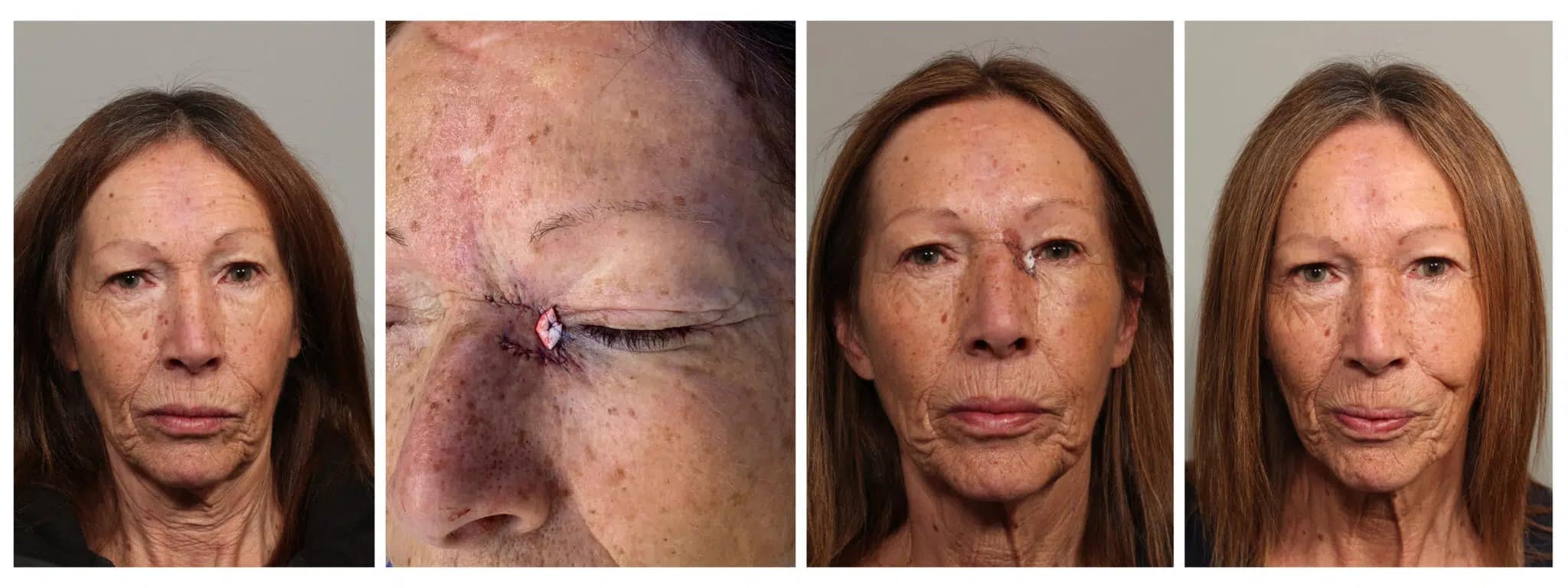
Mohs and Frozen Section Surgery for Eyelid Skin Cancer
Mohs surgery and Frozen Section surgery are commonly used to treat eyelid skin cancers because they allow the cancerous tissue to be removed while preserving as much healthy eyelid tissue as possible. This is especially important around the eyes, where even small areas of tissue loss can affect eyelid function, eye protection, and appearance.
With Mohs surgery, a Mohs-certified dermatologist removes the visible cancer and examines the tissue margins under a microscope. If cancer cells remain, additional tissue is removed until the margins are clear. For larger or more complex eyelid defects, reconstruction may be performed by an oculofacial plastic surgeon after the cancer has been removed.
Frozen Section surgery is another approach in which the cancer is removed, and the tissue margins are examined by a pathologist during the same surgical setting. Once the margins are confirmed to be clear, eyelid reconstruction can be performed. The best approach depends on the tumor type, size, location, patient needs, and whether same-day reconstruction is appropriate.
When is Chemotherapy Needed for Eyelid Cancer?
Chemotherapy to treat eyelid cancer is usually prescribed as a topical treatment. It may be used as a nonsurgical treatment for some low-risk basal cell carcinomas, in-situ squamous cell carcinomas, and some sebaceous gland carcinomas of the eyelid.
Who is a Candidate for Skin Cancer Excision Surgery?
Mohs and Frozen Section surgery have become the gold standards for treating basal cell and squamous cell carcinomas on the eyelids and face. Due to the minimized normal skin excision, and careful reconstruction that define these surgeries, they are especially suited to visible skin cancers. The Mohs and Frozen Section surgeries may be appropriate when a growth does not have defined borders, when skin cancer is growing rapidly, and when a patient wants the best possible aesthetic outcome. They are also often performed on recurrent skin cancer growths. If you are wondering whether these strategies are right for you, schedule a consultation and examination with our doctors.
Eyelid Reconstruction After Skin Cancer Removal
After eyelid skin cancer removal, reconstruction may be needed to restore eyelid shape, position, closure, comfort, and appearance. Small defects may be repaired with careful stitch placement, while larger or more complex defects may require local tissue flaps, skin grafts, or other reconstructive techniques using nearby eyelid, cheek, nose, temple, or other tissue.
If the tear drainage system near the inner corner of the eye is affected by the cancer or its removal, additional repair may be needed to help reduce the risk of long-term tearing. Our doctors plan reconstruction with attention to both eyelid function and natural-looking appearance.
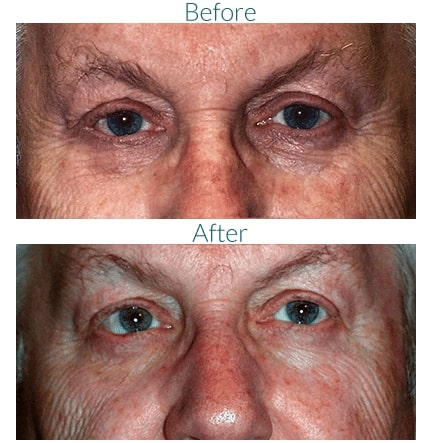
Recovery From Eyelid Reconstruction Surgery
Your recovery will depend on the type of reconstructive surgery used. For instance, a direct closure may be used if the amount of tissue removed is not overly large. Then the skin stitches will be removed after 7-10 days, while deeper ones would absorb over 6-12 weeks. For more involved tumors, skin grafts and the use of skin flaps attached to blood supply might be necessary. Both of these options require more involved in recovery times, and sometimes additional procedures.
Due to the delicate nature of the eye area, bruising and a “black eye” are very common and typically will last 1-2 weeks. Your surgeon will often prescribe antibiotics, eye drops, and/or ointments. Temporary eye dryness is common, while pain is uncommon. Mildly blurry vision may occur from ointments but a change in glasses prescription is rare. In the worst cases, it is necessary to temporarily sew the eyelids of one eye closed for a few weeks. Although recovery can vary depending on the size and location of the reconstruction, our doctors focus on restoring eyelid function, protecting the eye, and minimizing visible scarring whenever possible.
What Are the Risks of Skin Cancer Excision Surgery?
This surgery is generally considered very safe. The few risks associated with this procedure include:
- Anesthesia risks
- Bleeding at the surgery site
- Infection
- Bleeding beneath the skin (hematoma)
- Tenderness or pain at the surgical site
- Visible scars
Though rare, there are also risks of complications such as:
- Temporary or long-lasting numbness at the surgical site
- Nerve or muscle damage
- Eyelid redness, drooping, or other malposition
- Itching or shooting pain
- Dry eyes or watery eyes
- Loss of vision
- Keloid scarring
- Recurrence of cancer
- Need for additional surgery
Frequently Asked Questions
Why Choose Fante Eye & Face Center for Eyelid Lumps, Bumps, and Skin Cancer Treatment?
Eyelid growths require careful evaluation because the eyelids protect the eye, support tear function, and play an important role in facial appearance. Treatment must balance complete removal of concerning lesions with preservation of eyelid position, closure, comfort, and long-term function.
At Fante Eye & Face Center, patients are treated by doctors with advanced training in oculofacial plastic and reconstructive surgery. The team can evaluate eyelid lesions, perform or recommend biopsy, coordinate with Mohs surgeons or pathologists when needed, and plan reconstruction after skin cancer removal.
This specialized approach helps protect the eye while restoring the eyelid as naturally as possible, especially when tumors involve the eyelid margin, tear drainage system, inner corner of the eye, or larger areas of surrounding tissue.
Eyelid Lesion or Skin Cancer Consultation in Denver, Greenwood Village, Castle Pines and Highlands Ranch
If you have an eyelid lump, bump, lesion, non-healing spot, or a diagnosed eyelid skin cancer, Fante Eye & Face Center can help evaluate your condition and treatment options. During your consultation, our doctors will examine the eyelid and surrounding tissues, discuss biopsy or removal when appropriate, and explain whether Mohs coordination, Frozen Section surgery, eyelid reconstruction, or another treatment approach may be recommended.
To book an eyelid lesion or skin cancer consultation with Fante Eye & Face Center in Denver, CO, serving patients from Greenwood Village, Castle Pines and the surrounding communities, call (303) 839-1616 today.