Thyroid Eye Disease is an autoimmune condition that can affect the tissues around the eyes, often occurring in people with Graves’ disease or other forms of thyroid dysfunction. Symptoms may include eye bulging, eyelid swelling, redness, tearing, dryness, irritation, pressure, double vision, light sensitivity, and, rarely, vision loss.
At Fante Eye & Face Center, patients from Denver, Greenwood Village, and surrounding Colorado communities receive Thyroid Eye Disease evaluation and treatment from doctors with specialized experience in orbital disease, eyelid concerns, and oculofacial plastic surgery. Dr. Robert Fante is double board-certified and has lectured extensively on Thyroid Eye Disease, while both Dr. Levitt and Dr. Huang are ASOPRS-trained surgeons and ASOPRS Candidate Members. Together, the team can help determine whether Tepezza®, medical management, prism glasses, orbital decompression, eyelid surgery, or another treatment option may be appropriate.
What Is Thyroid Eye Disease?
Thyroid Eye Disease is an autoimmune condition in which the immune system affects the tissues around the eyes, including the muscles and fat within the orbit. It is often associated with Graves’ disease, a thyroid-related autoimmune condition, but eye symptoms can begin before, during, or after thyroid changes are diagnosed.
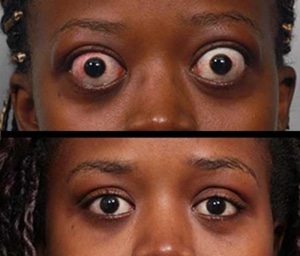
Thyroid Eye Disease can cause bulging eyes, redness, tearing, irritation, double vision, pain, pressure, eyelid changes, and, rarely, vision loss. Symptoms often progress gradually over many months, and the severity can vary widely from person to person.
What Causes Thyroid Eye Disease?
Thyroid Eye Disease, sometimes called Graves’ eye disease, is an autoimmune condition that affects the tissues around the eyes. It is commonly associated with Graves’ disease, an autoimmune thyroid condition, but the two are not exactly the same. Some patients develop Thyroid Eye Disease as a result of Graves’ disease, while others may have eye symptoms before thyroid disease is diagnosed or after thyroid levels have changed.
In Thyroid Eye Disease, the immune system mistakenly targets tissues around the eyes, including the muscles and fat within the orbit. This immune activity can cause inflammation, redness, swelling, tissue expansion, eye bulging, double vision, irritation, and, in some cases, scarring.
The exact cause is not fully understood, but Thyroid Eye Disease is more common in women and in people with autoimmune conditions. Smoking is also an important risk factor and can make the disease more severe.
About 50% of people who have Graves’ disease will develop eye disease, while about 90% of people will be hyperthyroid if they have eye disease.
Thyroid Eye Disease Symptoms
Thyroid Eye Disease symptoms can vary from person to person. Common symptoms include:
- Tearing, burning, redness, and dryness
- Increased sensitivity to light
- Swelling of the eyelids
- Achy pain or pressure behind the eyes
- Bulging of one or both eyes, which may first be noticed in photographs
Less common symptoms may include redness and thickening of the skin around the eyes, eyebrows, and cheeks, as well as double vision. Double vision may occur intermittently, only when looking in certain directions, or all the time.
Vision loss is uncommon, but it can occur and may begin as dimming, greying, or loss of color vision in one eye. Because vision loss can be an emergency, patients should seek prompt evaluation if they experience concerning vision changes.
General Thyroid Disease Symptoms
Since many people with thyroid eye disease also have thyroid disease itself, we should review some of those symptoms too. Most people with new-onset Graves’ disease will have hyperthyroidism, which means that their thyroid gland is producing too much thyroid hormone. Common symptoms of hyperthyroidism include anxiety, tremor, rapid heartbeat, unexplained weight loss, intolerance to heat, change in menstrual pattern, and swelling in the neck.
Dr. Fante has lectured extensively on Thyroid Eye Disease, and his recent lecture “Thyroid Eye Disease: the State of the Art, and What We Still Don’t Know” was published nationally by the Audio-Digest, an audio magazine for continuing physician education.
Diagnosing Thyroid Eye Disease
To diagnose Thyroid Eye Disease, our doctors will review your symptoms, examine your eyes and eyelids, and evaluate how the condition is affecting eye position, eye movement, comfort, and vision. Blood tests may also be reviewed, including thyroid hormone function tests and antibody testing related to Graves’ disease.
One common antibody test is the TSI test, or thyroid-stimulating immunoglobulin. While this test is not perfect, higher values may be associated with more active or severe disease. Imaging studies, such as CT or MRI scans of the orbit, may also be recommended to evaluate the eye muscles, orbital fat, and surrounding structures. Imaging can also help rule out other causes of similar symptoms, such as an orbital tumor.
Thyroid Eye Disease Treatment Options
Treatment for Thyroid Eye Disease depends on the severity of symptoms, disease activity, thyroid status, vision risk, and whether the condition is affecting eye position, comfort, or double vision. Some patients need supportive care, while others may benefit from medication, prism glasses, radiation, Tepezza®, or surgery.
Supportive care may include lubricating eye drops, ointments, treatment of dryness or irritation, smoking cessation, and coordination with a primary care physician or endocrinologist. When double vision is present, prism glasses or referral for eye muscle evaluation may be recommended.
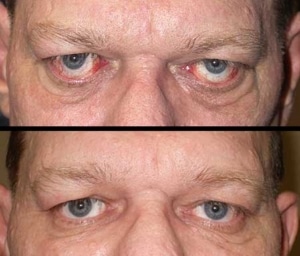
For some patients, reconstructive surgery may be helpful once the disease has stabilized. Surgical options may include orbital decompression to reduce bulging of the eye, eye muscle surgery to improve double vision, and eyelid surgery to restore a more normal eyelid position and appearance.
Tepezza® for Thyroid Eye Disease
Tepezza® is a prescription infusion medication used to treat Thyroid Eye Disease. It is administered as a series of eight intravenous infusions over several months and may help improve symptoms such as bulging eyes, double vision, redness, swelling, and eye discomfort in eligible patients.
Tepezza® does not work for everyone, and it is not the right treatment for every stage or presentation of Thyroid Eye Disease. During your consultation, our doctors will evaluate your symptoms, medical history, eye findings, and treatment goals to determine whether Tepezza® or another option may be appropriate.
Surgical Treatment for Thyroid Eye Disease
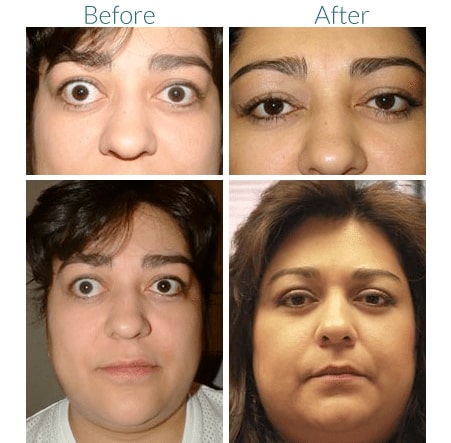
For some patients, reconstructive surgery can help restore more normal eye function, comfort, and appearance after Thyroid Eye Disease. Surgery is usually considered when symptoms such as eye bulging, double vision, eyelid retraction, or exposure-related irritation remain significant.
There are three possible phases of rehabilitative surgery, used as needed: orbital decompression to reduce eye bulging, eye muscle surgery to improve double vision, and eyelid surgery to restore a more normal eyelid position and shape. Most patients do not need all of these phases, and many patients do not need surgery at all.
Recovery After Thyroid Eye Disease Surgery
Since most surgical procedures performed in an operating room cause swelling and bruising, you will have sutures that require care for the first week or two. During this period, you’ll be able to see, move about, and accomplish a lot, but you will probably have at least one “black” eye. You will then be asked to avoid strenuous activities for the first week or two, and if necessary, you will be given more specific instructions on travel, bathing, and post-op care.
Your healing will be dependent on which procedure you are having done, your compliance with pre- and post-operative instructions, and your overall health. In addition, we will do our very best to ensure you and your caregivers have all the information you need to provide the best possible care. We are always here to help and available if any questions or concerns arise.
Thyroid Eye Disease Consultation in Denver, Greenwood Village, Castle Pines and Highlands Ranch
If you are experiencing eye bulging, double vision, eyelid swelling, redness, tearing, dryness, pressure, irritation, or other symptoms of Thyroid Eye Disease, Fante Eye & Face Center can help evaluate your condition and treatment options. During your consultation, our doctors will review your symptoms, examine your eyes and orbit, and discuss whether Tepezza®, supportive care, prism treatment, surgery, or another option may be appropriate.
To book a consultation with Fante Eye & Face Center in Denver, CO, serving patients from Greenwood Village, Castle Pines and the surrounding communities, call (303) 839-1616 today.