
Orbital fractures are broken bones around the eye socket, often caused by sports injuries, falls, motor vehicle accidents, or other facial trauma. Because the orbit surrounds the eye, eye muscles, nerves, and nearby facial structures, injuries to it can cause bruising, swelling, numbness, double vision, eye movement problems, or changes in eye position.
At Fante Eye & Face Center, patients from Denver, Greenwood Village, and surrounding Colorado communities receive orbital fracture evaluation and treatment from doctors with specialized training in orbital disease, eyelid anatomy, and oculofacial plastic and reconstructive surgery. Dr. Robert Fante is double board-certified and a fellow of the American Society of Ophthalmic Plastic and Reconstructive Surgery, while both Dr. Levitt and Dr. Huang are ASOPRS-trained surgeons and ASOPRS Candidate Members. This experience helps the team determine whether observation, medical management, CT imaging, or orbital fracture repair may be appropriate.
What is an Orbital Fracture?
Trauma to the face can often result in broken bones around the eye socket, also known as the orbit. While the cheekbone and forehead are both quite strong, many of the bones around the eye are delicate and fragile.
Some anatomists believe that the delicate orbital bones act like the “crumple zone” built into automobiles to protect the passengers. When the orbital bones break and absorb the impact, the eyeball itself is safeguarded.
Orbital Fracture Emergency
Rarely, and almost exclusively in children, orbital fractures can be an emergency. Since children’s bones can be springier than adults’, they sometimes break and then snap back into position. When this happens to the orbit, the eye muscle(s) can be badly entrapped or stuck in the broken bone. As a result, the muscles can then die within a few hours. This type of “trapdoor fracture” is common in kids who have nausea or vomiting, have almost no bruising, but who have one eye that can’t look up. Emergency repair should be performed as soon as possible.
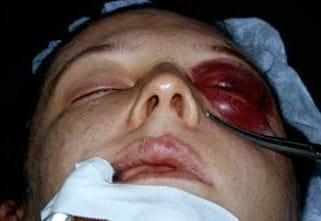
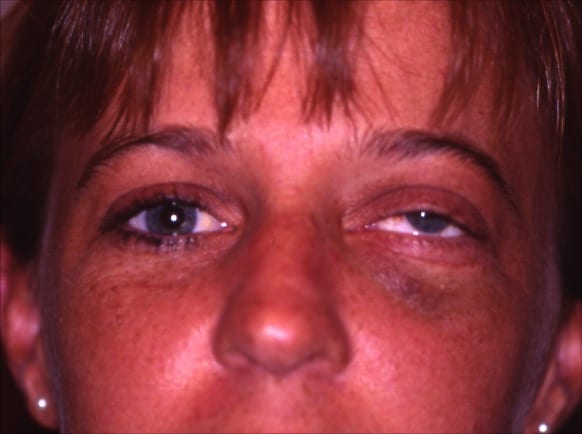
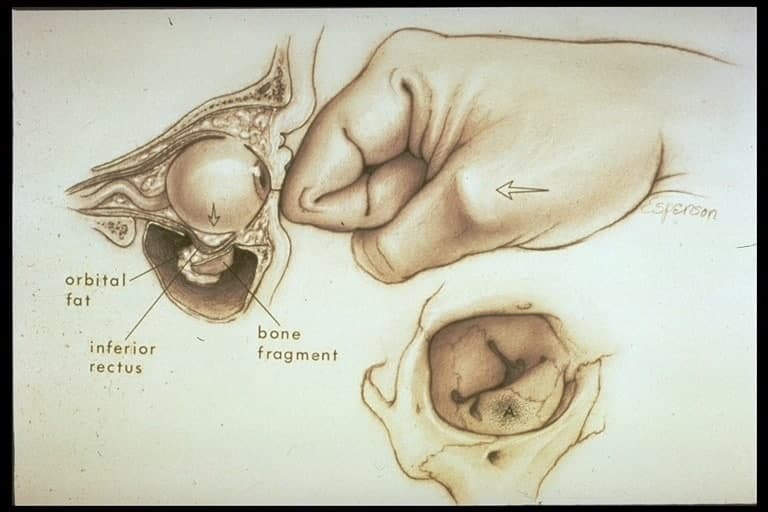
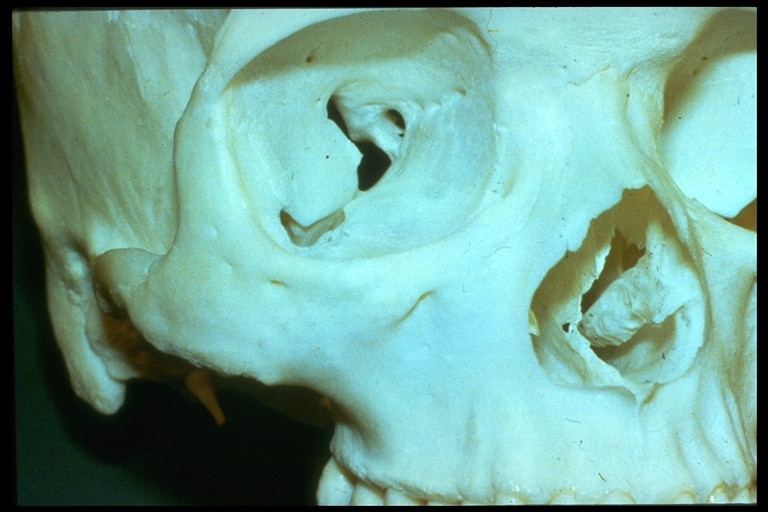
Click here to view more before and after photos
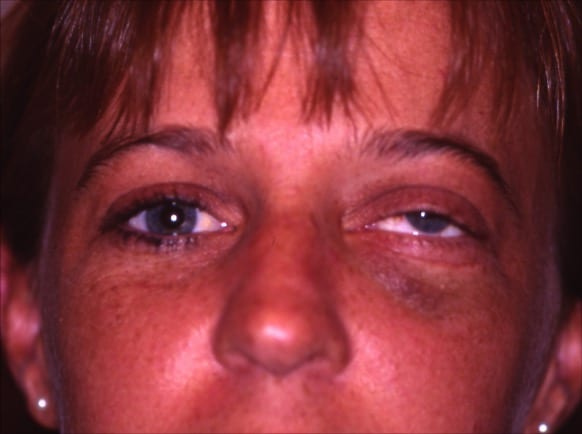
This type of orbital fracture is called a “blow-out” fracture. In any case, many kinds of trauma can cause orbital fractures. These can include being hit in the upper face with a baseball, tennis ball, steering wheel, or fist, or falling and striking the face on furniture, stairs, trampolines, or many other objects.
Types of Eye Socket Fractures
The most common orbital fractures occur where the bone is most delicate: at the floor and the inner (medial) wall. Fractures of the outer (lateral) wall are less common and more likely to involve the cheekbone. These are also known as tripod fractures or zygomaticomaxillary complex (ZMC) fractures. Although most people who have an orbital fracture will be evaluated and treated soon after the trauma, occasionally we will see people with fractures that are years old. If needed, surgery is still often possible even years later.
Diagnosing Fractures to the Orbit
Orbital fractures can often be diagnosed during a meticulous examination by an eye doctor or an emergency room physician. Other serious eye injuries can be present at the same time, including bleeding or inflammation inside the eyeball itself, or even rupture or laceration of the eyeball, and so a careful examination is very important. A CT or CAT scan will almost always be performed to show exactly where the fracture(s) are and to help decide what to do next.
Symptoms of an Orbital Fracture
Orbital fractures can be painful or relatively painless; in fact, numbness is one of the most common symptoms, particularly in the cheek, upper lip, nose, and upper teeth. Orbital fractures are also frequently accompanied by bruising and swelling: a “black eye” or a “shiner”. Of course, bruising and swelling can also occur from more minor injuries to the eye area. Interestingly, in children, the orbital bones can break without much bruising and instead the child may have nausea and weakness that indicate a more serious and urgent problem.
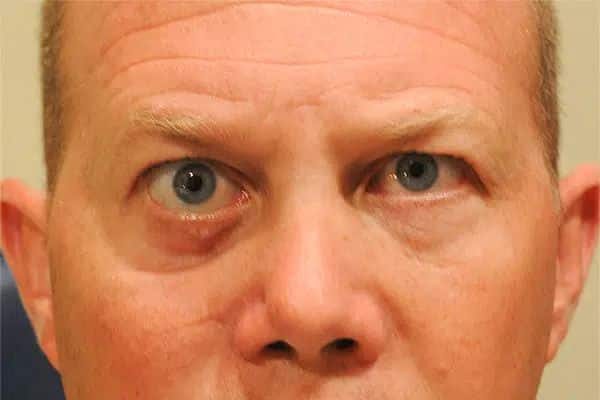
Double vision is another common symptom, either all the time or only when looking in certain directions (most commonly up). This occurs when the eye muscles get stuck or “entrapped” in the broken bone. The blurring of vision is usually mild when only the orbital bones are broken and the eye itself is OK. Finally, orbital fractures that are severe enough to also involve the neighboring cheekbone can cause difficulty opening the mouth, chewing, and speaking.
What People Say About Us!
Click here to read more reviews.
Will Surgery Be Needed for an Orbital Fracture?
Not every orbital fracture requires surgery. Small fractures may heal on their own, especially when there is no persistent double vision, eye movement restriction, or concern that the eye may sink backward or downward.
Surgery may be recommended when the fracture traps an eye muscle, causes ongoing double vision, or creates a risk of long-term deformity. In some cases, our doctors may monitor the injury for one to two weeks to see whether swelling and symptoms improve before recommending repair.
The CT scan is usually very helpful in predicting who will need surgery, but sometimes physicians will watch patients over a few weeks to see what happens before deciding on a plan for surgical repair. Current research has even shown that double vision may only be temporary for some fractures so that it may sometimes make sense for the doctor to wait one or two weeks to see if surgery will be needed.
Orbital Fracture Treatment Options
Small orbital fractures may be treated with supportive care, oral antibiotics when appropriate, instructions to avoid blowing the nose, and time for bruising and swelling to improve.
When surgery is needed, orbital fracture repair is usually performed as an outpatient procedure under general anesthesia. Most fractures can be repaired through hidden incisions behind the lower eyelid or in the corners of the eyes. Depending on the fracture, plastic or titanium sheets, plates, or screws may be used to support the orbital wall. Our team has successfully performed thousands of orbital fracture surgeries.
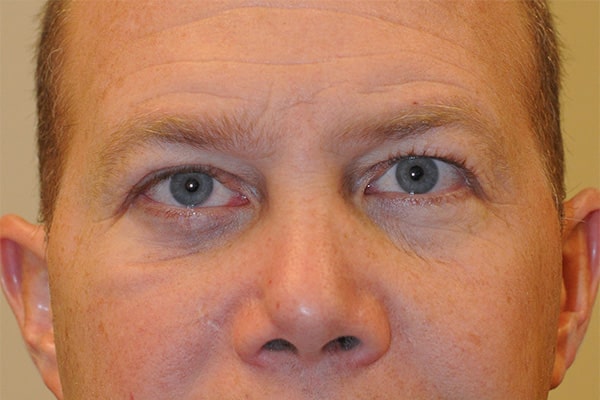
3d Orbital Reconstruction – Before & After
Recovery From Orbital Fracture Repair Surgery
After surgery, the surgeon or nurses might check eyesight in the recovery room before the patient can go home. Usually, there is no need for an eye patch or bandage. The bruising (and sometimes the numbness) is temporarily worse for a week or so and ice packs can help for the first 36 hours. Pain medication, oral antibiotics, and/or antibiotic eye drops may be necessary. Most people are able to return to work or school within a few days or a week.
Are There Risks With Orbital Fracture Repair?
As with any surgery around the eye, orbital fracture repair has potential risks. These may include swelling, bruising, bleeding, infection, scarring, numbness, double vision, dry eye symptoms, eyelid position changes, implant-related issues, asymmetry, persistent eye movement problems, or the need for additional treatment.
Vision-threatening complications are rare, but they can occur with orbital surgery. Our doctors will review the risks specific to your injury, CT findings, and treatment plan before surgery.
Orbital Fracture Consultation in Denver & Greenwood Village, CO
If you have experienced facial trauma, eye socket injury, double vision, eye movement problems, facial numbness, bruising, swelling, or changes in eye position, Fante Eye & Face Center can help evaluate your orbital fracture treatment options. During your consultation, our doctors will review your symptoms, examine the eye and orbit, discuss CT imaging as needed, and determine whether observation, supportive care, or surgical repair is appropriate.
To book a consultation with Fante Eye & Face Center in Denver, CO, serving patients from Greenwood Village, Castle Pines and the surrounding communities, call (303) 839-1616 today.