
Losing an eye can be physically and emotionally difficult, whether the loss is related to trauma, cancer, infection, pain in a blind eye, or another serious condition. Eye removal surgery and ocular prosthetic care are designed to restore comfort, support healing, and help create the most natural appearance possible after the loss of an eye.
Loss of an Eye and Ocular Prosthetics
Losing an eye can have a significant impact on a person’s self-confidence and overall self-image. On a physical level, the patient faces the transition into monocular (single-eye) vision as well as cosmetic changes. On an emotional level, the loss of an eye can lead to feelings of insecurity and isolation. We pride ourselves on helping our patients stay connected to their hope for future well-being after eye surgery. Many people who undergo eye removal and subsequent prosthesis fitting continue to enjoy a full life, including employment in their chosen field. It is our hope that, in working with our doctors and team, the restoration of a natural appearance supports you in a life you enjoy.
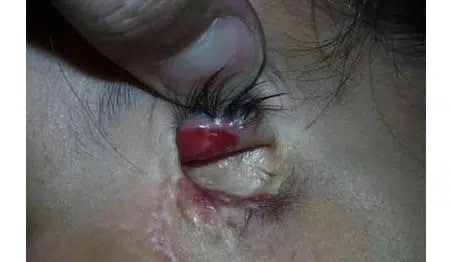
Eye Removal Surgery
Eye removal surgery may be advisable for people with cancer of the eye such as choroidal melanoma. Other reasons for this procedure include unmanageable pain in a blind eye, end-stage glaucoma, uncontrollable infection, and severe trauma to the eye. Removal may also take place for cosmetic reasons if a blind eye has become very disfigured.
Our doctors conduct a thorough consultation and examination to determine whether you are a candidate for an enucleation or evisceration procedure. Each type of eye removal is performed to allow reconstruction of the socket utilizing an ocular implant.
During an enucleation surgery, the entire eyeball is removed. Evisceration is more complex, removing the structures within the eyeball including the lens, cornea, iris, retina, and vitreous. What remains is the white of the eye. After evisceration, the implant is placed within this shell. A prosthesis is inserted over the implant once the eye socket has healed.
Socket Reconstruction and Preparing for a Prosthetic Eye
After a typical enucleation or evisceration to remove an eye, an implant is placed, and no further surgery is usually needed for a prosthetic eye to be worn successfully. Once the eye socket has healed, a custom prosthesis can be fabricated to fit over the ocular implant, which is placed behind the eyelids.
For more complex situations in which prior trauma or surgery has resulted in significant scarring, tissue loss, or volume loss, the socket may need to be reconstructed before the artificial eye can fit comfortably and look natural. The purpose of eye socket reconstruction is to prepare the tissue for optimal acceptance, comfort, and appearance of the ocular prosthetic.
Reconstructive techniques may include fat grafting, mucosal grafting, eyelid reconstruction, or other procedures designed to improve socket shape, volume, and prosthetic fit. When reconstruction is needed, our doctors will explain the recommended technique and what to expect before moving forward.
What is an Ocular Prosthetic?
An ocular prosthetic is an artificial, shell-like structure inserted over an ocular implant to restore the natural appearance of the eye. The prosthetic is like a large hard contact lens painted to match the iris and sclerae of the remaining eye. We work with highly skilled prosthetic specialists across Colorado’s Front Range to help you achieve the best possible appearance and fit.
Living With an Ocular Prosthetic
An ocular prosthetic is designed to restore the appearance of the eye after healing from eye removal surgery or socket reconstruction. While it does not restore vision, a well-fitted prosthetic can help restore facial balance, support the eyelids, and allow many patients to feel more comfortable in social and professional settings.
Most patients adjust well to wearing a prosthetic eye. The prosthesis is custom painted and shaped to match the remaining eye as closely as possible, and ongoing care with a prosthetic specialist helps maintain comfort, fit, and appearance over time.
Risks of Eye Removal and Socket Reconstruction
Surgical procedures carry inherent risks. It is important to us that you are well informed about your surgery, risks, and the expected outcome. You should also know that our team’s extensive education and experience in handling delicate ocular trauma and surgery is matched by our dedication to providing personal care to each individual. In addition to managing surgical risks such as poor healing, infection, implant extrusion, droopy eyelids, asymmetry, and bleeding, we strive to be the resource our patients need as they transition into life with a prosthetic eye.
Frequently Asked Questions
Why Choose Fante Eye & Face Center for Eye Removal and Ocular Prosthetics?
Eye removal and ocular prosthetic care require more than surgical skill. Patients may need support with comfort, healing, eyelid position, socket volume, prosthetic fit, appearance, and the emotional transition following the loss of an eye.
At Fante Eye & Face Center, patients are treated by doctors with advanced training in oculofacial plastic and reconstructive surgery. The team evaluates the eye socket, eyelids, surrounding tissues, prior trauma or surgery, scarring, and facial symmetry before recommending enucleation, evisceration, socket reconstruction, or a prosthetic procedure.
The goal is to help restore comfort and create the most natural appearance possible while supporting each patient through a difficult and personal experience.
Ocular Prosthetics Consultation in Denver, Greenwood Village, Castle Pines and Highlands Ranch
If you are facing eye removal, have already lost an eye, or need help with socket reconstruction or ocular prosthetic planning, Fante Eye & Face Center can help guide your next steps. During your consultation, our doctors will evaluate your condition, discuss your goals, and explain whether enucleation, evisceration, socket reconstruction, prosthetic planning, or another approach may be appropriate.
To book an ocular prosthetics consultation with Fante Eye & Face Center in Denver, CO, serving patients from Greenwood Village, Castle Pines and the surrounding communities, call (303) 839-1616 today.