
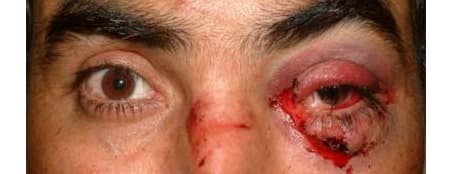
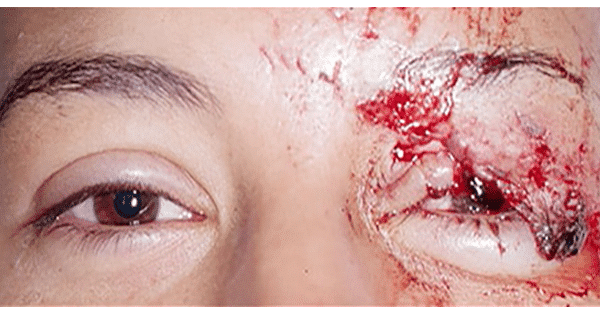
Eyelid trauma can occur from dog bites, auto accidents, sports injuries, falls, sharp objects, and other injuries involving the eye area. Because the eyelids help protect the eye, spread tears, support vision, and maintain normal blinking, even small lacerations or injuries may require careful evaluation and precise repair.
At Fante Eye & Face Center, patients from Denver, Greenwood Village, and surrounding Colorado communities receive eyelid trauma evaluation and reconstruction from doctors with specialized expertise in eyelid anatomy, tear duct function, and oculofacial plastic surgery. Dr. Robert Fante is double board-certified and a fellow of the American Society of Ophthalmic Plastic and Reconstructive Surgery, while both Dr. Levitt and Dr. Huang are ASOPRS-trained surgeons and ASOPRS Candidate Members. This focused training helps the team repair traumatic eyelid injuries with attention to eye protection, function, appearance, and long-term healing.
What Do I Need to Know Immediately After Experiencing Eye Trauma?
Most often, the eyelids are not the only part that is injured. Blunt trauma (such as a baseball, a fist, or a steering wheel) will sometimes break the eye socket (orbital) bones, the cheekbone, or the nose. Blunt trauma can cause bleeding in the eye socket, or damage to the eye itself that could lead to glaucoma, retinal damage, and other problems. Some of these can rarely cause blindness, and urgent evaluation at an emergency room is recommended.
If the eyelid trauma is caused by a sharp object (such as glass, a knife, a fishhook, or an animal’s tooth), there may be serious injuries to the eye or to nearby muscles and nerves. Again, it is prudent to seek an urgent evaluation at an emergency room, even if the eye itself seems ok.
If you have experienced an injury to the eye that has caused any loss of eyesight or is bleeding profusely, contact a local emergency room for a thorough evaluation. The simplest wounds may be repaired by emergency doctors, but others may require an oculoplastic specialist for the initial repair or for subsequent reconstruction. Fortunately, initial eyelid repair can sometimes be safely delayed for a day or two, allowing any eye injuries to be assessed or ruled out before the consultation for eyelid repair.
Eyelid trauma often involves a laceration to the tissue of the upper or lower lid. It is important that a surgeon evaluates the skin as well as the underlying muscles and the tear ducts, as each level of injury requires specific repair techniques.
Who is a Candidate for Reconstructive Surgery After Eyelid Trauma?
Even if an injury to the eye has not damaged the eye itself, there are reasons to consult with an oculoplastic surgeon regarding reconstructive surgery. If left untreated, an eyelid laceration can have long-term implications for appearance as well as vision. Cuts that penetrate the eyelid tissue may damage the muscles that operate the opening and closing of the eyelid, leading to permanent drooping (called ptosis), or difficulty closing the eye. At the very least, eyelid injuries may pose a risk for scarring and deformity.
An injury may also affect the lacrimal sac or lacrimal gland. The lacrimal gland is a small structure that sits at the upper, outer corner of the eyelid. Conversely, the lacrimal sac is located beside the bridge of the nose, at the inner edge of the eye. The lacrimal structures are involved in the production and drainage of tears. Damage to either can result in excessive, persistent tearing or eye infection.
Adults and children who have sustained damage to the eyelid and are in good general health may be good candidates for eyelid surgery. After a thorough assessment, necessary treatment can be discussed.
What is the Recovery Like After Reconstructive Eyelid Surgery?
Soon after reconstructive eyelid surgery, a topical antibiotic ointment is applied to the surgical area. This ointment may be applied during the first week after surgery. Post-operative instructions will outline how often antibiotics should be used. In addition to topical medication, an oral antibiotic may also be prescribed. For the first few days after surgery, cold compresses may be applied periodically to improve comfort and reduce swelling and bruising.
Swelling may be pronounced for several days after reconstructive treatment. This is due to the combination of trauma from the initial injury and the surgical repair itself. Usually, patients see a dramatic improvement in swelling within the first two weeks of recovery. Full healing occurs over several months.
A follow-up office visit takes place a week to 10 days after reconstructive surgery to observe progress and remove sutures. As healing continues to progress, patients should expect to be able to blink and close their eyes completely. The eyelashes should have a correct anatomical position and should not rub against the eyeball. Tear production and draining should be normal.
Finally, the goal is to have the best possible scar with the least effect on normal appearance. These are the objectives of eyelid reconstruction.
Frequently Asked Questions
Why Choose Fante Eye & Face Center for Eyelid Trauma Repair?
Eyelid trauma repair requires specialized expertise, as injuries can affect not only appearance but also vision, tear drainage, and eyelid function. Proper treatment depends on a detailed understanding of eyelid anatomy, the tear duct system, and the structures that protect the eye.
At Fante Eye & Face Center, patients are treated by doctors with advanced training in oculofacial plastic and reconstructive surgery. Dr. Robert Fante is double board-certified and a fellow of the American Society of Ophthalmic Plastic and Reconstructive Surgery, whileDr. Levitt and Dr. Huang are fellowship-trained in this specialty. This experience is especially important when trauma involves the eyelid margin, muscles, tear drainage system, or surrounding structures.
The team focuses on restoring eyelid position, protecting the eye, supporting normal blinking and tear function, and achieving the best possible functional and cosmetic outcome.
Eyelid Trauma Consultation in Denver, Greenwood Village, Castle Pines and Highlands Ranch
If you have an acute eye injury with vision loss, severe bleeding, or concern for damage to the eye itself, seek immediate care at the nearest emergency room. For eyelid trauma evaluation, repair, or reconstruction after urgent eye concerns have been assessed, Fante Eye & Face Center can help determine the appropriate next steps.
To book an eyelid trauma consultation with Fante Eye & Face Center in Denver, CO, serving patients from Greenwood Village, Castle Pines and the surrounding communities, call (303) 839-1616 today.